Operator command
Defines intended direction and assist request.
 Engineering
Motorized mobility
Force, torque, traction, speed, runtime and powered-wheel system integration.
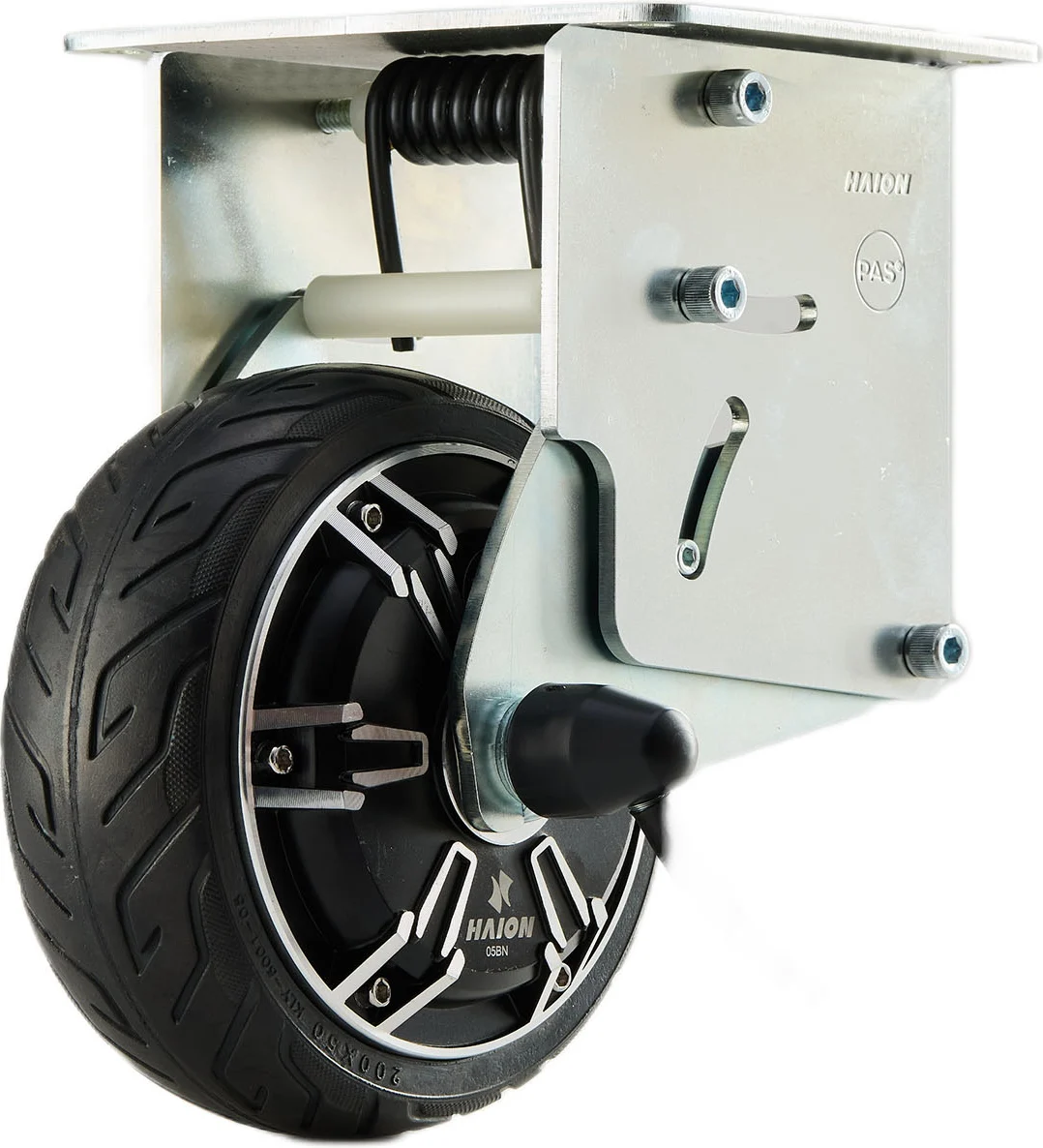

01Tractive force
02Wheel torque
03Traction
04Duty cycle
Quick answer
The caster system still supports and steers the equipment. A motorized wheel contributes driving force so the operator does not have to provide the entire propulsion demand.
Defines intended direction and assist request.
Converts the request into controlled motor output.
Limits how much useful force reaches the route.
Must be verified with the complete cart and duty cycle.
System architecture, safety controls and performance limits vary by product configuration and application.
P6A · Product data pending owner approval
Official HAION product page ↗System integration
The powered wheel is one part of the mobility system. Wheel layout, caster geometry, braking, controls, floor condition and equipment stability still require equipment-level validation.
Design inputs
Wheel, bearing, alignment and floor losses
Gravity component along the route
Force required to change speed
Usable force at the wheel–floor interface
Operating and recovery pattern
Start with mass, route, rolling-resistance assumption, acceleration and powered-wheel geometry. Then validate the complete system.
Open powered-wheel calculator →System boundaries
HAION commercial reference
Images and identifiers come from HAION's public product pages. Numerical data stays out of this knowledge site until owner approval.
Published knowledge
Battery runtime is estimated from usable watt-hours divided by average power, then verified against route and duty-cycle testing.
A motorized caster converts electrical energy into controlled wheel torque while supporting or sharing the equipment load.
Movable mass cannot be determined from one rating because route resistance, slope, traction, acceleration and duty cycle set the requirement.
Select a powered wheel from route force, traction, duty cycle, controls, packaging and complete-cart validation requirements.
Powered assist supports an operator-guided cart, while AGV and AMR systems add autonomous or infrastructure-guided movement.
A powered caster is integrated into equipment, while an electric tug is typically a separate vehicle coupled to one or more carts.
Required wheel torque follows tractive force and wheel radius, while load influences rolling, slope and acceleration forces.
Usable drive force is limited by wheel–floor friction and the normal load carried by each powered wheel.
A Powered Assist System adds controlled drive force to a cart or trolley while the operator retains guidance and supervision.
Published by HAION CASTER INDUSTRIAL CO., LTD.. General engineering guidance is kept separate from product-specific claims.
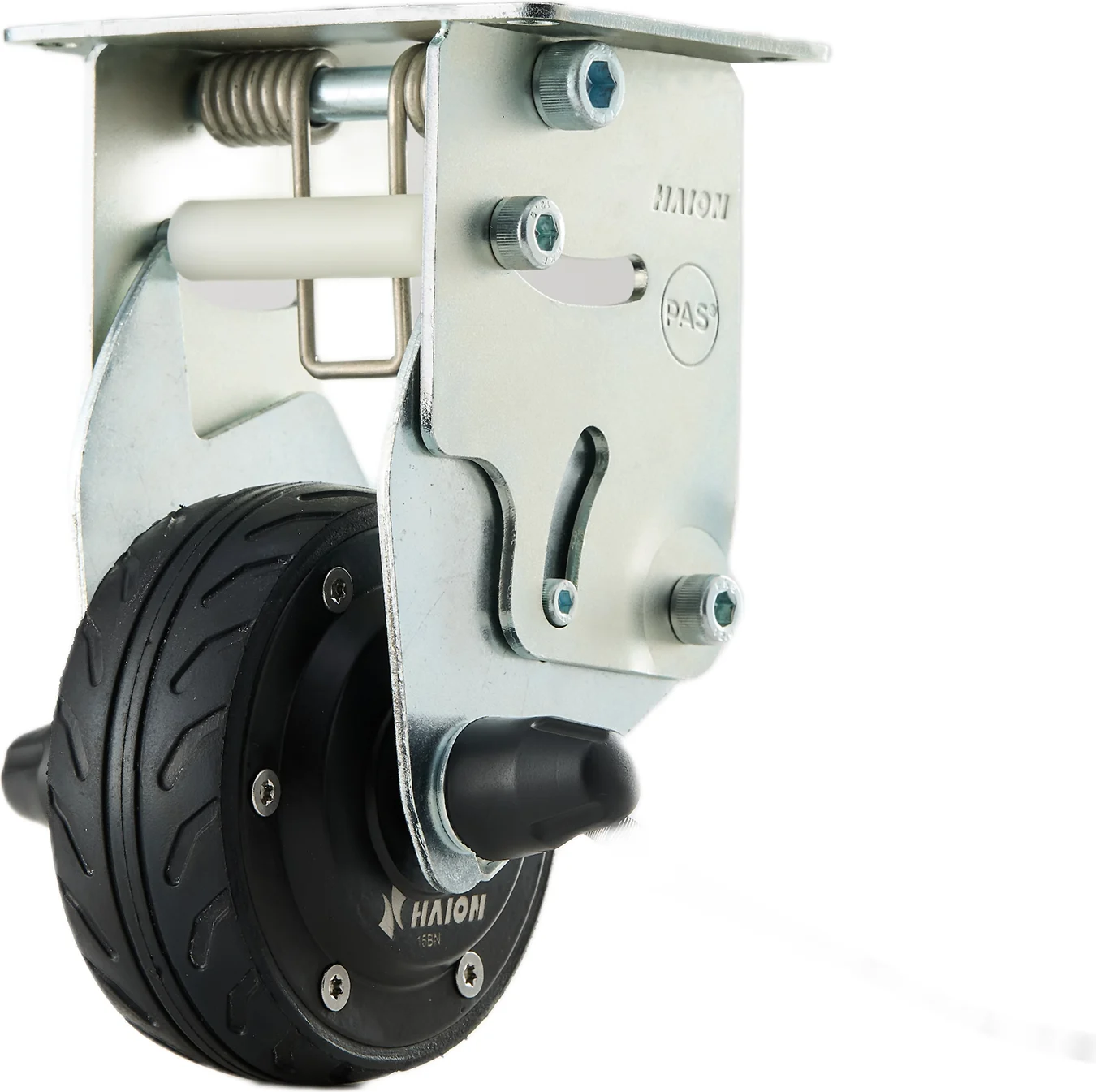 P4APAS (Motorized system)
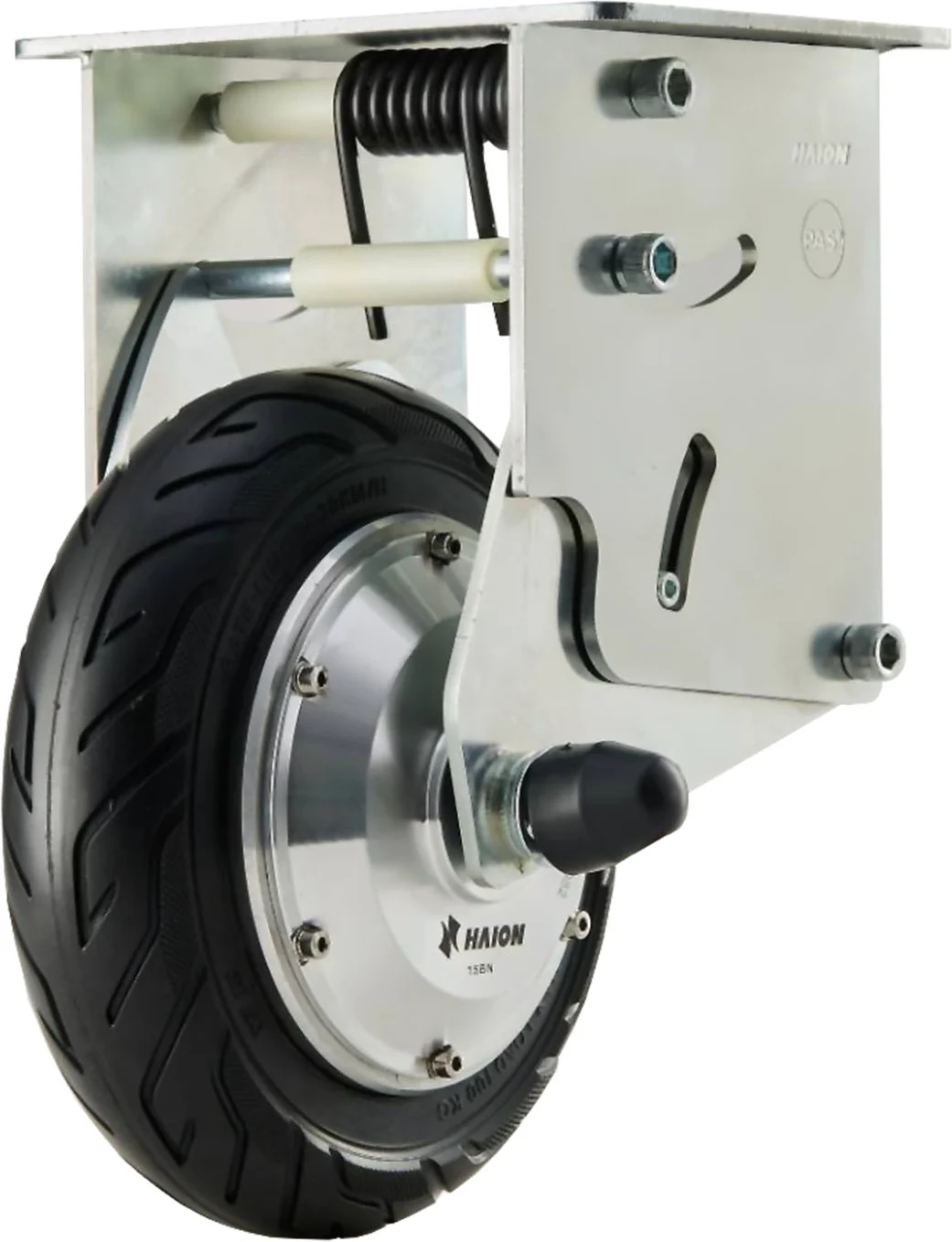 P8APAS (Motorized system)