Wheel geometry
Diameter, tread and deformation influence the contact response.
 Engineering
Forces and geometry
Load, push force, rolling behavior, offset, bearings, floors and vibration.
01Load
02Rolling force
03Wheel diameter
04Caster offset
It is the measured response of the wheel, caster, load, alignment and floor at a defined operating condition.
Diameter, tread and deformation influence the contact response.
The complete load path changes wheel and bearing behavior.
Joints, debris, texture and thresholds can dominate the route.
Swivel orientation and wheel layout affect actual push force.
Use a conservative support assumption for preliminary sizing, then validate the real frame and route.
Include equipment, payload, accessories and foreseeable loading.
Check how the load shifts across the installed caster positions.
Do not assume every caster carries an equal reaction.
Allow for uneven support, thresholds and dynamic transfer.
Each photograph is tied to the matching HAION category and product page. It identifies the physical product family; it is not a substitute for application validation.
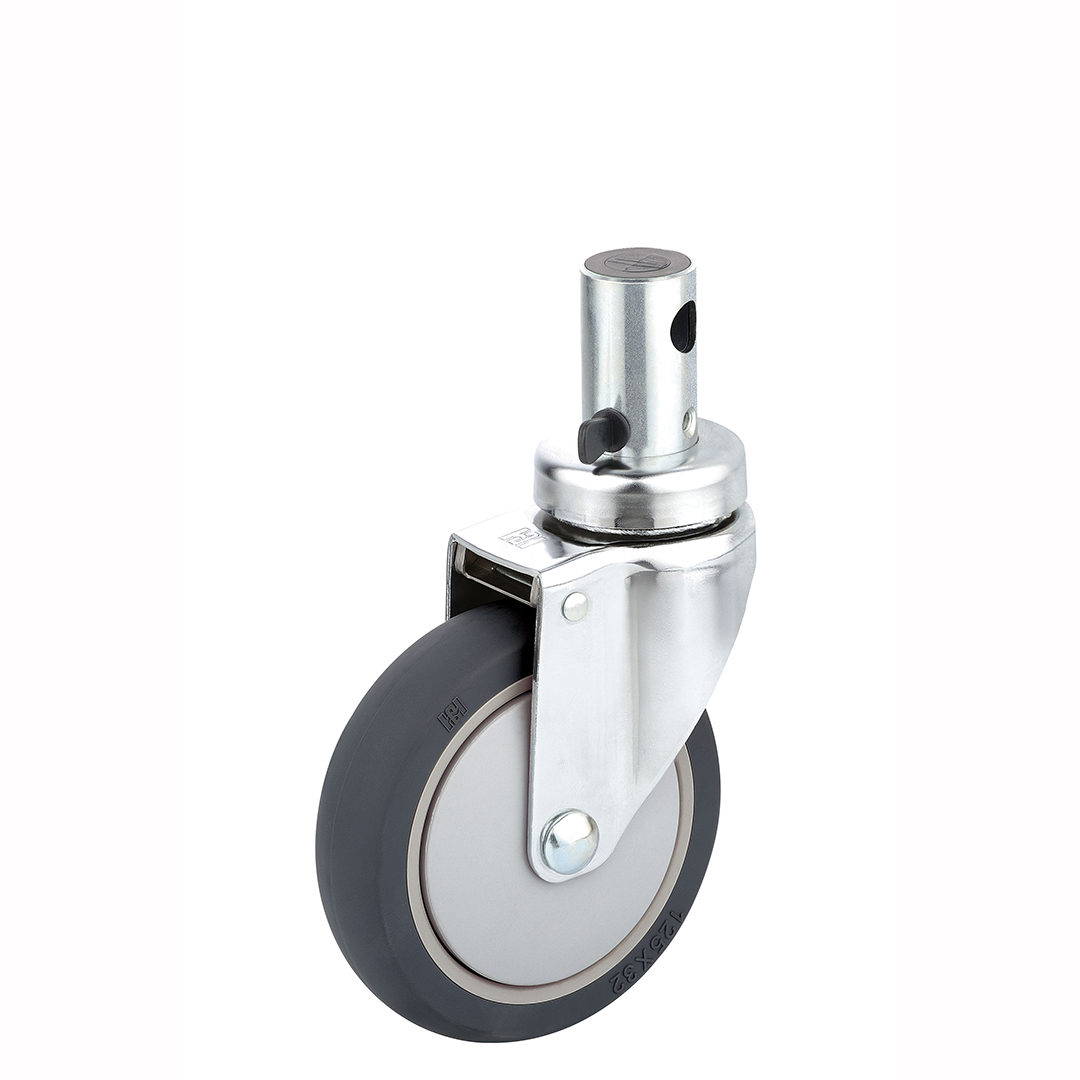
H391A-3A100UPB(2FT) · Product data pending owner approval
Official HAION product page ↗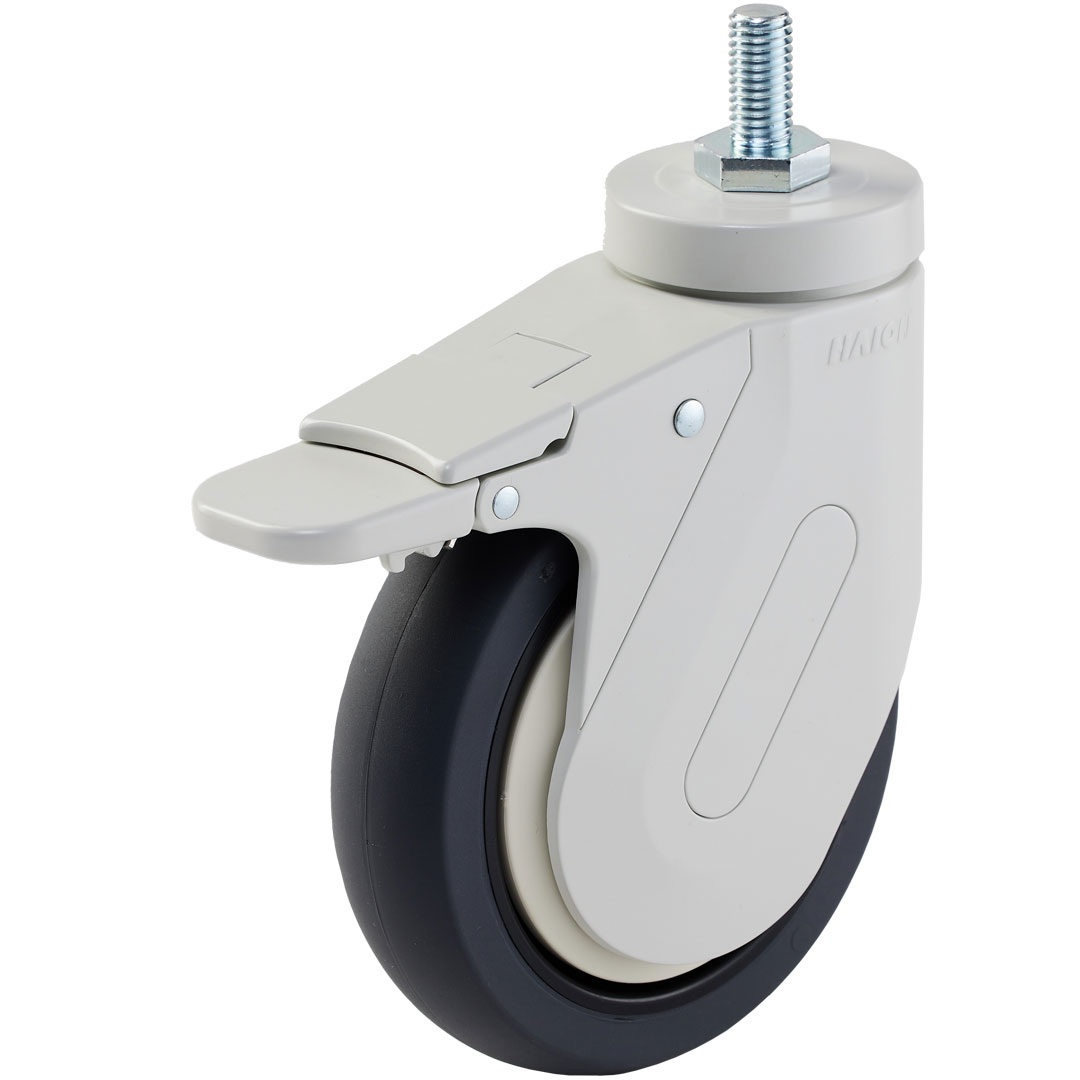
H76-4T125TPB-N · Product data pending owner approval
Official HAION product page ↗Model the system
Published knowledge
Caster offset is the horizontal distance between the swivel axis and the wheel contact or axle reference that creates trailing behavior.
Static load describes supported weight at rest, while dynamic load addresses the more demanding conditions created during movement.
Floor hardness, joints, debris, slope and surface condition influence wheel size, tread, push force, noise and durability.
Calculate total system mass, nominal load per caster and a conservative design load that reflects uneven support and operating conditions.
Rolling resistance is the force that opposes steady wheel motion because the wheel, floor and bearings deform or dissipate energy.
Starting force is the peak effort needed to initiate motion, while rolling force describes effort after stable movement begins.
Larger wheels generally cross small obstacles more easily, but wheel material, bearing, load and floor still control the actual force.
Published by HAION CASTER INDUSTRIAL CO., LTD.. General engineering guidance is kept separate from product-specific claims.