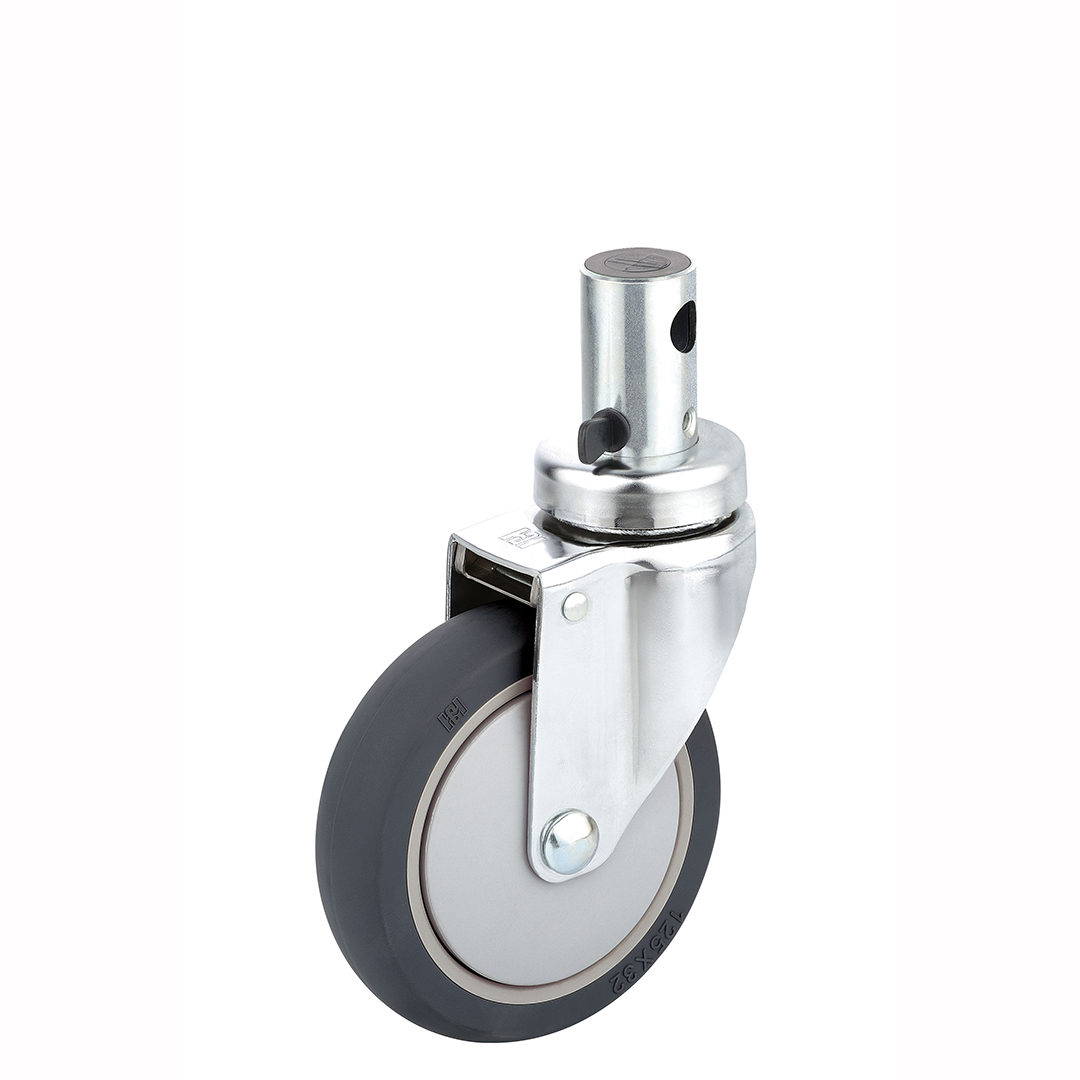
Forces and geometry
What Is Rolling Resistance in a Caster System?
Rolling resistance is the force that opposes steady wheel motion because the wheel, floor and bearings deform or dissipate energy.
By HAION Engineering Knowledge TeamUpdated 2026-08-21Evidence: engineering-principle
DIRECT / 01Quick answer
Rolling resistance is the force opposing steady motion after a wheel is already rolling. A simplified level-floor estimate is F ≈ Crr × m × g, but actual cart force also includes starting resistance, caster swivel, wheel and floor deformation, alignment, contamination, slope and acceleration.
Where does the resistance come from?
Wheel tread and floor materials deform at the contact patch. Bearings and seals dissipate energy. Misalignment, debris and scrub add losses. Because these effects interact, material labels alone do not determine push force.
Simplified model
On a level floor, Frolling ≈ Crr × m × g. The coefficient Crr represents the tested wheel–floor–load combination. It should not be treated as a universal property of “PU” or “TPR.”
How should it be measured?
Record wheel diameter, tread, bearing, load, floor, speed, temperature and whether casters are aligned. Separate breakaway force from steady rolling force. Use representative equipment geometry because swivel behavior and load distribution affect the measured system.
Commercial referenceNeed a manufacturer configuration?
Knowledge content remains independent of product selection. For available commercial solutions, continue to the official HAION website.
Visit HAION Caster ↗