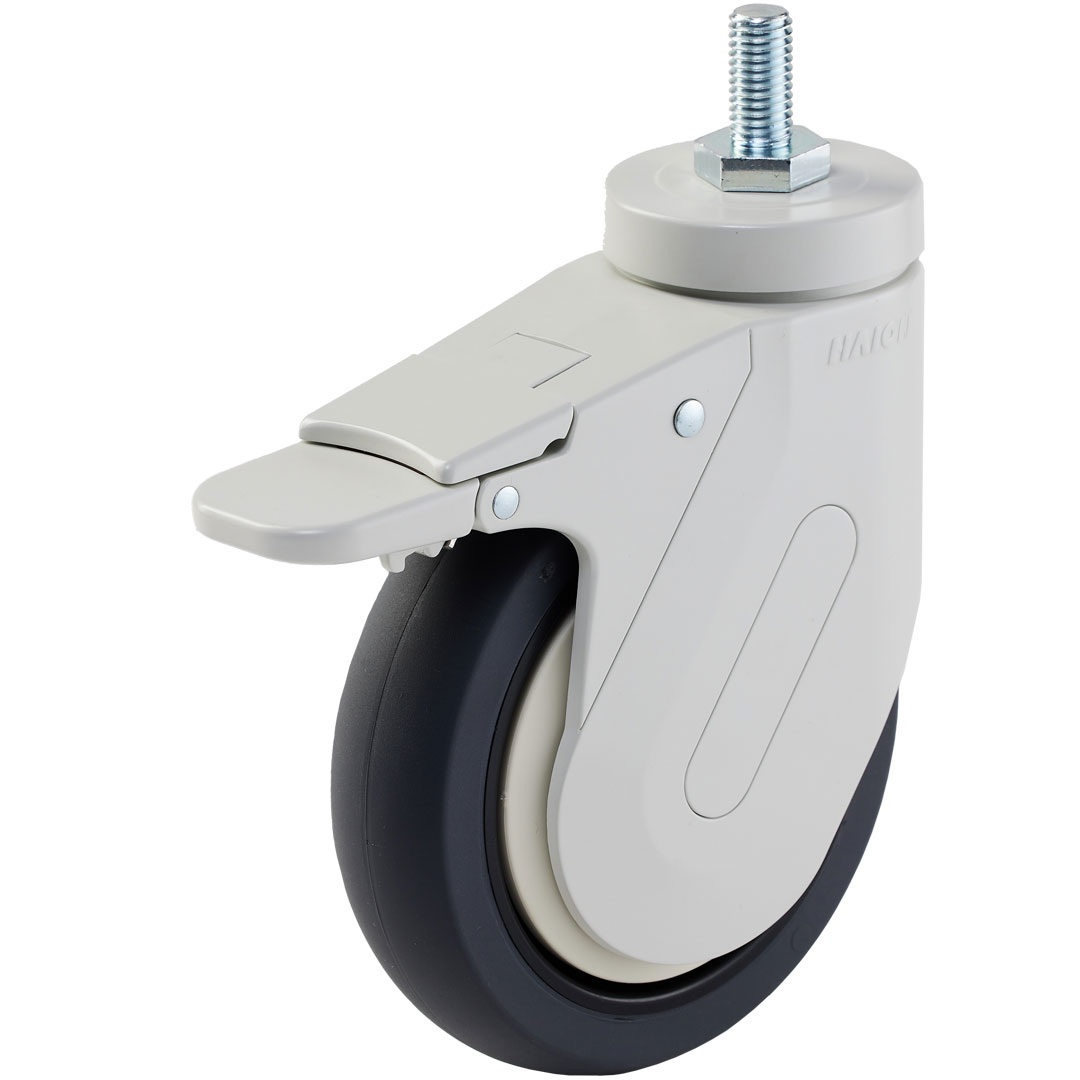
Forces and geometry
How Wheel Diameter Affects Rolling Resistance
Larger wheels generally cross small obstacles more easily, but wheel material, bearing, load and floor still control the actual force.
By HAION Engineering Knowledge TeamUpdated 2026-08-21Evidence: engineering-principle
DIRECT / 01Quick answer
Increasing wheel diameter generally reduces the relative size of floor joints and small obstacles, improving rollover behavior. It may reduce force in a given wheel–floor system, but no universal percentage applies. Tread deformation, bearing losses, load, floor and installation constraints remain important.
Why does diameter matter at an obstacle?
A larger radius gives a more favorable contact geometry when climbing a floor joint or threshold. The horizontal force needed to raise the load is therefore generally lower for a larger wheel, all else equal.
Why is steady-floor performance not automatic?
Two wheel sizes can use different tread thicknesses, hardnesses or bearings. A larger but highly deformable tread can still require substantial force. Floor compliance can also dominate the system.
Practical selection
Choose the largest diameter compatible with equipment height, swivel envelope, stability, maneuverability and mounting strength, then confirm with representative push-force and obstacle tests.
Commercial referenceNeed a manufacturer configuration?
Knowledge content remains independent of product selection. For available commercial solutions, continue to the official HAION website.
Visit HAION Caster ↗