
Primary mobility requirements
A hospital bed may need to maneuver in a room, track through a corridor, cross thresholds, remain stable during care and respond consistently to one linked control. Write these operating states before selecting hardware. The required modes determine whether free swivel, directional guidance, total locking or a sequence such as 3FN, 2FT or 2OP should be investigated.
Load and load distribution
Calculate total equipment mass plus the maximum intended payload. A nominal four-way division is only a first comparison. Frame tolerance, floor unevenness, bed articulation, accessories and center-of-gravity movement can transfer more load to fewer casters. Use a conservative load-bearing count and validate the assembled frame.
Starting force, rolling resistance and wheel diameter
Starting force includes more than steady rolling resistance. Swivel alignment, wheel and floor deformation, bearing condition, tread material and thresholds can all increase operator effort. A larger effective wheel diameter can improve obstacle traversal, but may conflict with installation height and equipment geometry. Measure on the intended floor whenever possible.
Central Locking caster for hospital bed and directional control
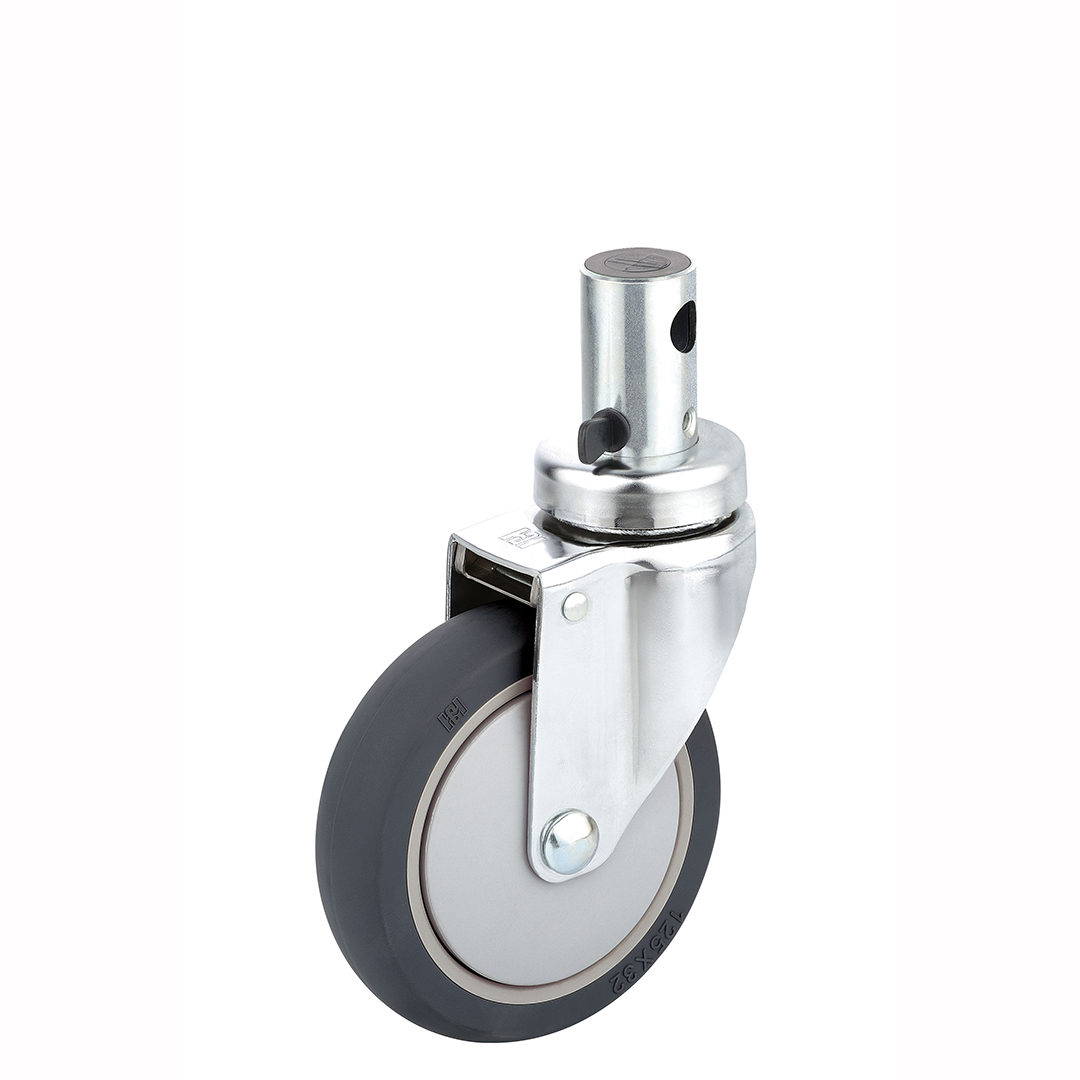
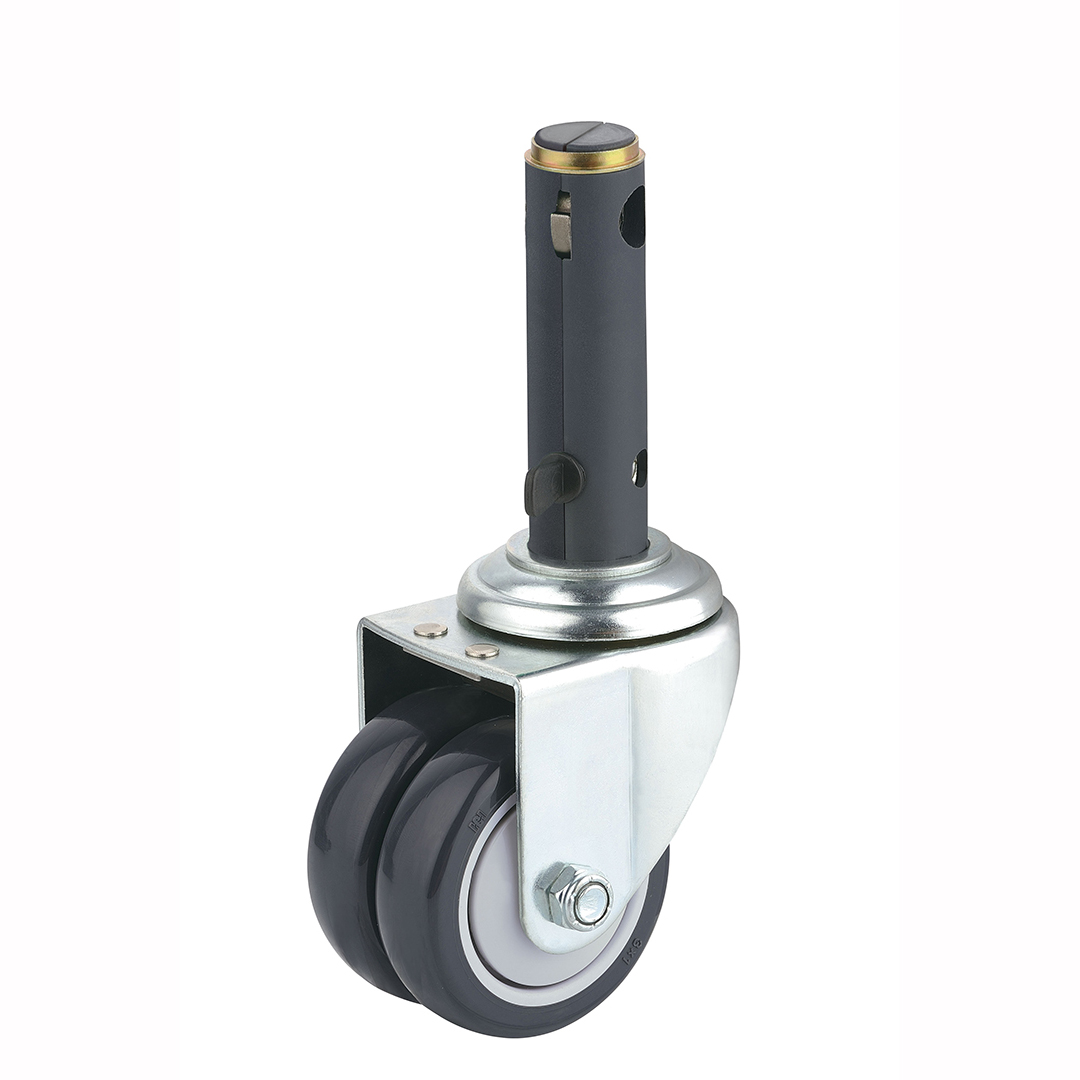
A Central Locking caster for hospital bed must be treated as part of a linked system. Pedal input, linkage travel and every caster actuator must reach the intended mode consistently. Directional lock supports straight-line tracking; total lock restrains both swivel and wheel rotation. These functions are not interchangeable, and the selected mode sequence must match the bed workflow.
Single versus double wheel
Wheel count alone does not determine performance. Compare total envelope, swivel behavior, contact geometry, cleaning access, floor interaction, mounting interface and the validated load path. Select by the equipment requirement rather than by appearance.
Conductivity, antistatic behavior and cleaning
If the equipment has an electrical-resistance requirement, define the applicable standard, complete current path, floor, test method and acceptance range before selecting a caster option. Likewise, document cleaning agents, temperature, washdown exposure and disinfection process. An available product option is not proof that the complete bed meets a requirement.
Noise, vibration and mounting
Noise and vibration emerge from tread, wheel geometry, floor joints, load, frame stiffness and speed. Mounting must also preserve alignment and structural load transfer. Installation height, top plate or stem interface, available envelope, linkage geometry and service access belong in the bed specification.
Common mistakes
- Selecting only by catalog load.
- Treating directional lock and total lock as synonyms.
- Assuming four casters always share load equally.
- Ignoring thresholds, elevator joints and floor transitions.
- Applying a conductive or washable label without a defined equipment-level test.
- Mapping a product model before the engineering requirement profile is complete.
HAION engineering note
HAION publicly identifies the Central Locking caster for hospital bed as a medical application. Exact model mapping, numerical specification reuse and any compliance statement on this knowledge center remain subject to HAION owner approval. Use the caster load calculator and selection assistant to document requirements before opening the official HAION solution range.